
The dental laboratory industry is evolving rapidly. Digital dentistry is no longer a luxury; it is a necessity for survival and growth. For laboratory owners, capital allocation requires careful planning. Investing in the right equipment determines the quality of prosthetic work and the profitability of the business. While traditional tools remain relevant, the focus has shifted to digital efficiency.
The Core Investment: Hybrid Dry and Wet Milling Machines
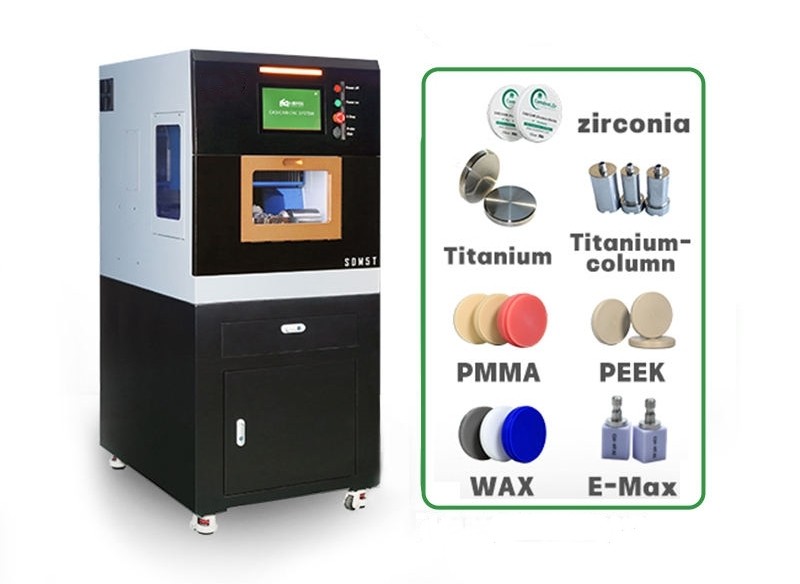
The milling unit is the workhorse of the modern laboratory. When considering a purchase, the hybrid dry and wet milling machine stands out as the superior choice. This single unit offers the versatility required to process a wide range of dental materials.
Dry milling is the standard for zirconia. It is fast, efficient, and clean. A hybrid machine allows laboratories to process zirconia blanks with high speed and precision. The absence of coolant simplifies the maintenance process and reduces operational costs. However, dry milling has limitations. It cannot process glass ceramics or certain metals effectively.
This is where wet milling becomes essential. Wet milling utilizes a coolant liquid to reduce heat and friction. This is critical for milling lithium disilicate (e.g., IPS e.max) and titanium abutments. The coolant preserves the internal structure of these sensitive materials. It prevents micro-cracks that could lead to prosthetic failure.
Investing in separate dry and wet machines is costly and consumes valuable floor space. A hybrid machine consolidates these functions. It provides the capability to switch between modes. This flexibility allows laboratories to accept a broader spectrum of cases. From full-contour zirconia bridges to delicate glass ceramic veneers, one machine handles it all.
When evaluating a hybrid machine, consider the spindle power and axis movement. A 5-axis simultaneous movement is mandatory for complex implant bars and abutments. The B-axis rotation range is a critical specification. A wider range allows for the machining of deep undercuts without collision. This reduces the need for manual adjustments and ensures a passive fit for implant frameworks.
Two polular B axis rotation data on the milling unit:
| Feature / Specification | Equipment A (+30° to -210°) | Equipment B (+30° to -110°) |
| Machine Concept | “Universal Solution” Designed for complex geometries and undercuts with continuous rotation capabilities. | “Standard Solution” Designed for high-speed production of standard restorations with limited axis movement. |
| Ideal Application | Ideal for complex implant cases, full-arch bars, titanium abutments, and deep undercuts. Processes difficult anatomies without manual intervention. | Ideal for single crowns, small bridges, and standard zirconia frameworks. Best suited for high-volume, simple geometric cases. |
| Cost Conclusion | Higher initial investment but reduces long-term labor costs by minimizing manual finishing and re-fixturing. | Lower initial investment making it an accessible entry point for start-ups or labs with simpler case loads. |
| Revenue Conclusion | Enables higher profit margins by capturing lucrative, high-value implant and complex prosthetic cases. | Generates steady volume-based revenue through efficient production of standard everyday restorations. |
The return on investment for a hybrid mill is significant. It eliminates the need for outsourcing. It reduces material waste. Most importantly, it guarantees consistency in marginal integrity and occlusal anatomy. For a dental lab aiming for high-end prosthetics, the hybrid milling machine is the most critical acquisition.
Precision in Additive Manufacturing and Scanning
Following the milling unit, 3D printing and scanning technologies define the digital workflow. The resolution of a 3D printer dictates the clinical outcome. Many entry-level printers offer an XY resolution of 30 microns. While acceptable for dental models, this resolution may lack detail for precise temporary restorations or delicate wax patterns.
High-end printers offer an XY resolution of 16.8 microns. This finer resolution results in significantly smoother surface textures. It captures microscopic details of the dental arch. For laboratories producing night guards, surgical guides, or temporary crowns, the 16.8-micron resolution ensures a superior fit. The layer lines are less visible, reducing post-processing time. Investing in higher resolution prevents the “stair-stepping” effect often seen on angled surfaces.
Scanning is the entry point of the digital workflow. The accuracy of the scanner determines the accuracy of the final prosthesis. Benchtop scanners come with various camera configurations. A 1.5MP (megapixel) camera system is a cost-effective entry point. It is suitable for basic orthodontic models and simple single-unit crown cases.
However, a 5.0MP camera system offers a substantial upgrade. The higher resolution captures a denser point cloud. This results in sharper images of the preparation margin. A clear margin is vital for the CAD technician to design a crown with accurate marginal adaptation. The 5.0MP system also scans deep undercuts and interproximal areas more effectively. For laboratories focusing on implantology and full-arch rehabilitation, the 5.0MP scanner is the professional standard.
The Traditional Backbone
While digital equipment dominates the conversation, traditional casting equipment retains a place in the laboratory. High-speed grinders and model trimmers are essential for finishing tasks. The Pindex system remains a reliable method for model fabrication, providing stability for die trimming. Sandblasters are indispensable for surface treatment, ensuring mechanical retention for bonding. While not the primary focus of modern investment, these tools support the daily workflow.
Just as digital milling units and traditional casting equipment are engineered to fabricate anatomical dental prostheses, the technician’s workstation requires the same level of consideration. The dental technician must perform intricate tasks such as margin refinement, ceramic layering, glazing, and final finishing. These processes demand stability and intense focus. Therefore, an adjustable stool is a critical piece of laboratory equipment. It allows the technician to maintain an optimal posture during long hours of detailed work. The stool must offer forward and backward tilt options, alongside integral height adjustability. These features ensure the technician can comfortably position themselves close to the microscope or model. Ultimately, proper ergonomic support is as vital as the milling machine itself; it prevents fatigue and ensures the manual dexterity required for high-quality prosthetic artistry.
Whether you are outlining a new dental lab purchasing plan or generating ideas to upgrade your current facility, the right equipment is the key to unlocking superior prosthetic results. Take a look here, as Dentsma has compiled a detailed list of all essential dental lab equipment available to streamline your workflow. This comprehensive selection ensures you can find every necessary tool—from digital milling units to precision handpieces—to build a modern and efficient laboratory.
In conclusion, a strategic investment plan prioritizes versatility and precision. A hybrid milling machine expands material capabilities. High-resolution printers and scanners ensure clinical accuracy. Balancing these digital advancements with reliable traditional tools creates a robust, future-proof dental laboratory.